











FAIR is a non-profit organization dedicated to providing well-documented answers to criticisms of the doctrine, practice, and history of The Church of Jesus Christ of Latter-day Saints.
mNo edit summary |
|||
| Line 10: | Line 10: | ||
=={{Response label}}== | =={{Response label}}== | ||
The inverted five-ponted star was first displayed on the exterior of an LDS temple in Nauvoo, Illinois in the early 1840s. | The inverted five-ponted star was first displayed on the exterior of an LDS temple in Nauvoo, Illinois in the early 1840s. (See [http://www.templestudy.com/wp-content/uploads/2009/09/NauvooTemple-WilliamWeeks.jpg here].) | ||
The Prophet Joseph Smith indicated that he received the pattern for the Nauvoo Temple by revelation (cf. {{S||DC|124|42}}). He told the architect of the project, "I have seen in vision the splendid appearance of that building illuminated, and will have it built according to the pattern shown me."{{ref|hc.1}} The Prophet also stated that he had seen at least one of the exterior symbols of that temple in this vision.{{ref|quincy.1}} | |||
The Prophet Joseph Smith indicated that he received the pattern for the Nauvoo Temple by revelation (cf. | |||
One of the foremen who helped to build the Nauvoo Temple recorded what the emblems on its exterior represented. He said, | One of the foremen who helped to build the Nauvoo Temple recorded what the emblems on its exterior represented. He said, | ||
:"The order of architecture was unlike anything in existence; it was purely original, being a representation of the Church, the Bride, the Lamb’s wife. John the Revelator, in the 12 chapter [and] first verse of [the book of Revelation,] says, 'And there appeared a great wonder in heaven; a woman clothed with the sun, and the moon under her feet, and upon her head a crown of twelve stars.' This is portrayed in the beautifully cut stone of this grand temple." | :"The order of architecture was unlike anything in existence; it was purely original, being a representation of the Church, the Bride, the Lamb’s wife. John the Revelator, in the 12 chapter [and] first verse of [the book of Revelation,] says, 'And there appeared a great wonder in heaven; a woman clothed with the sun, and the moon under her feet, and upon her head a crown of twelve stars.' This is portrayed in the beautifully cut stone of this grand temple."{{ref|mace.1}} | ||
Joseph Smith revealed the connection between the heavenly woman of the apostle John's vision and the restored Church. In the Prophet's revision of the King James Bible he modified Revelation chapter 12 verses 1 and 7 to read: “And there appeared a great sign in heaven, in the likeness of things on the earth; a woman clothed with the sun, and the moon under her feet, and upon her head a crown of twelve stars . . . the woman . . . was the Church of God.” (JST Revelation 12:1, 7). | Joseph Smith revealed the connection between the heavenly woman of the apostle John's vision and the restored Church. In the Prophet's revision of the King James Bible he modified Revelation chapter 12 verses 1 and 7 to read: “And there appeared a great sign in heaven, in the likeness of things on the earth; a woman clothed with the sun, and the moon under her feet, and upon her head a crown of twelve stars . . . the woman . . . was the Church of God.” ([http://scriptures.lds.org/en/jst/136 JST Revelation 12:1,7]). | ||
This is the same arrangement of the symbols on the exterior pilasters of the Nauvoo Temple -- moon (bottom), sun (middle), and stars (top). | This is the same arrangement of the symbols on the exterior pilasters of the Nauvoo Temple -- moon (bottom), sun (middle), and stars (top). | ||
The stars are associated in the book of Revelation passage with a "crown" which is a symbol of royalty. In another section of the book of Revelation Jesus Christ proclaims His descent through the royal lineage that is within the house of Israel and then pronounces one of His titles: "I am the . . . offspring of David, and the bright . . . morning star" (Rev. 22:16). This is the title that nineteenth century Latter-day Saints assigned to the inverted five-pointed star. One of these emblems was put into place on the east tower of the Logan, Utah temple in 1880. An eyewitness to the event reported the following which was printed in a major newspaper: "Carved upon the keystone is a magnificent star, called the Star of the Morning." | The stars are associated in the book of Revelation passage with a "crown" which is a symbol of royalty. In another section of the book of Revelation Jesus Christ proclaims His descent through the royal lineage that is within the house of Israel and then pronounces one of His titles: "I am the . . . offspring of David, and the bright . . . morning star" (Rev. 22:16). This is the title that nineteenth century Latter-day Saints assigned to the inverted five-pointed star. One of these emblems was put into place on the east tower of the Logan, Utah temple in 1880. An eyewitness to the event reported the following which was printed in a major newspaper: "Carved upon the keystone is a magnificent star, called the Star of the Morning."{{ref|den.1}} | ||
In 1985 LDS Church Architect Emil B. Fetzer stated that the inverted stars on early LDS temples were not sinister but were “symbolic of Christ.” He said that when the LDS Church “uses the pentagram or sunstone in an admirable, wholesome and uplifting context, this does not preclude another organization’s using the same symbols in an evil context.”{{ref.trib.1}} | |||
A connection between the "inverted pentagram" and Satan "is almost certainly a 19th century invention by Eliphas Levi," who was a "defrocked priest."{{ref|gazette.1}} He did not begin publishing references to this idea until 1854, a decade after the death of the Prophet Joseph Smith. | |||
===Varied uses of five-pointed stars=== | |||
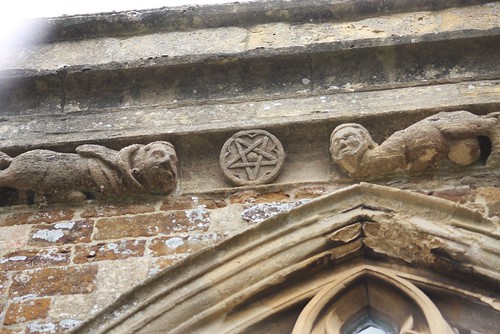
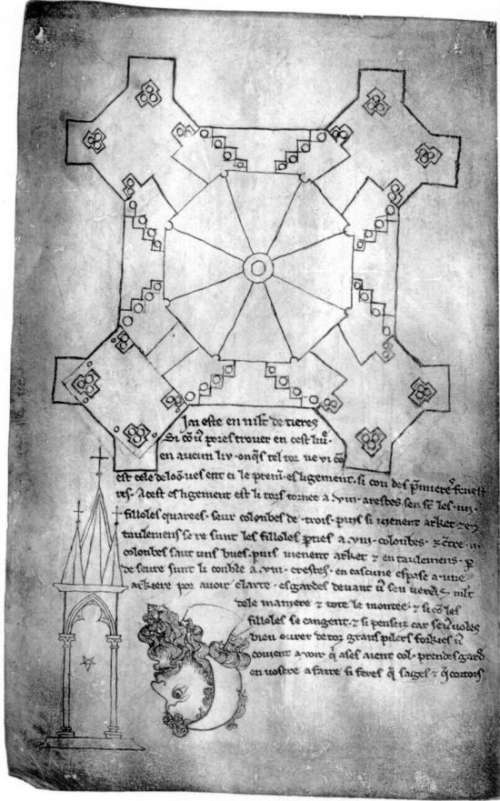
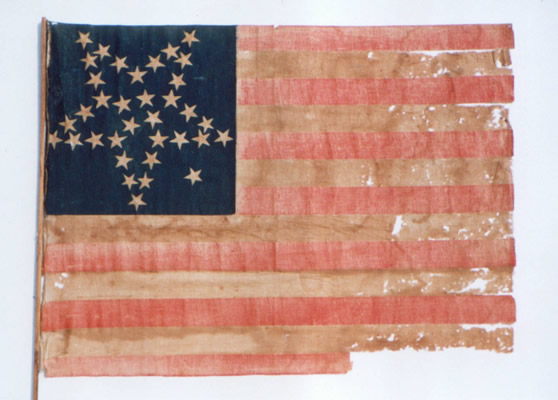
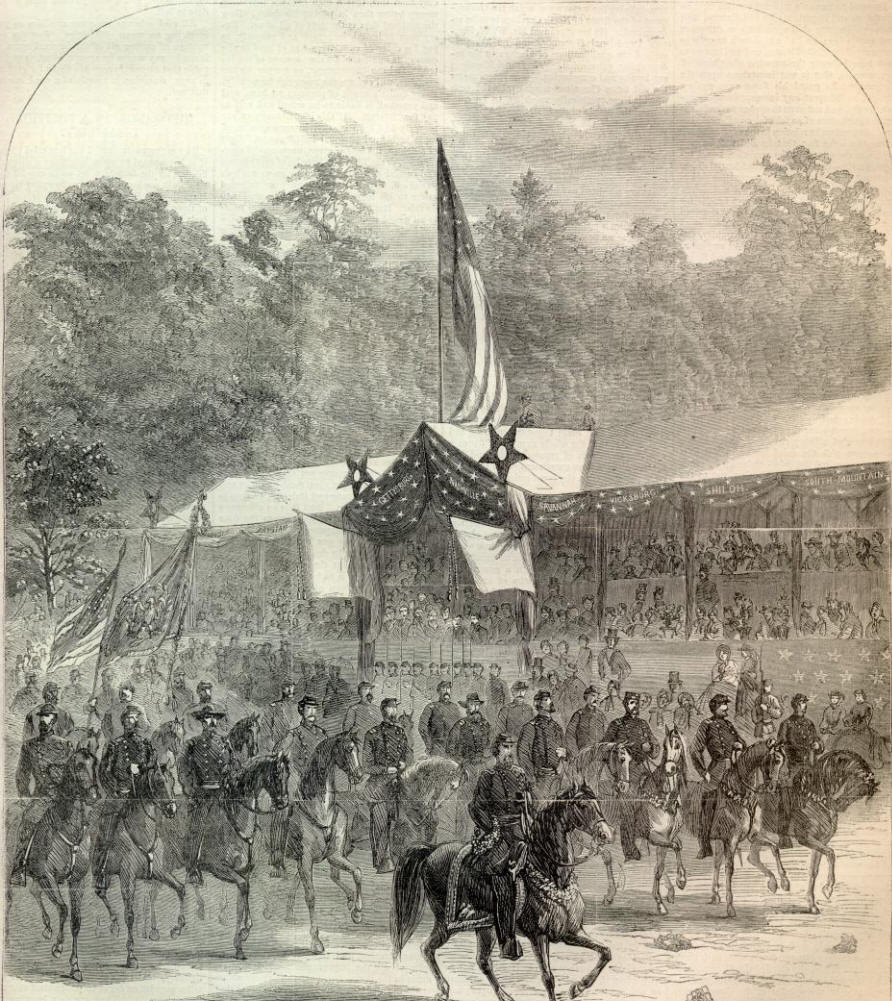
'''Below are links to examples of the inverted five-pointed star in ancient Christian usage and also numerous modern, non-evil usages.''' | '''Below are links to examples of the inverted five-pointed star in ancient Christian usage and also numerous modern, non-evil usages.''' | ||
| Line 84: | Line 83: | ||
* Christmas Star {{link|url=http://i03.c.aliimg.com/img/offer/80/52/45/94/80524594}} | * Christmas Star {{link|url=http://i03.c.aliimg.com/img/offer/80/52/45/94/80524594}} | ||
* Grammy Awards logo {{link|url=http://www.fonearena.com/blog/wp-content/uploads/Anant/grammy_logo_090204.jpg}} | * Grammy Awards logo {{link|url=http://www.fonearena.com/blog/wp-content/uploads/Anant/grammy_logo_090204.jpg}} | ||
* Nutrition Program {{link|url=http://www.co.nash.nc.us/Portals/0/Graphics/HLT/winnerscircle.jpg}} | |||
* Micmac Sign for Heaven {{link|url=http://commons.wikimedia.org/wiki/File:Our_Father_in_heaven_-_Mikmaq_hierogl.gif}} | |||
* Armagh Observatory Seal (watermark) {{link|url=http://www.arm.ac.uk/press/Lunar_eclipse0503_pr.html}} | |||
* Post Civil War Parade Stand {{link|url=http://www.sonofthesouth.net/leefoundation/civil-war/1865/civil-war-parade_Picture2.jpg }} | |||
* Steamboat Decoration {{link|url=http://www.oldprintshop.com/images/large/53206.jpg}} | |||
==Endnotes== | |||
=== | #{{note|hc.1}} {{Book:Smith:History of the Church|vol=6|pages=196-97}} | ||
#{{note|quincy.1}} {{Book:Quincy:Figures of the Past|pages=389}} | |||
#{{note|mace.1}} Wandle Mace, Autobiography, 207, Special Collections, Harold B. Lee Library, Brigham Young University, Provo, Utah). | |||
#{{note|den.1}} ''Deseret Evening News,'' vol. 13, no. 228 (20 August 1880): 3. | |||
#{{note|trib.1}} "The Public Forum," ''Salt Lake Tribune'' (13 November 1985): A–15. | |||
#{{note|gazette.1}} ''The Mathematical Gazette'' vol. 78, no. 483 (November 1994): 319. | |||
==Further Reading== | |||
Some people view either upright or inverted five-pointed stars in an adverse way. For sources that address both of these configurations in several modern and ancient cultures see the following: | Some people view either upright or inverted five-pointed stars in an adverse way. For sources that address both of these configurations in several modern and ancient cultures see the following: | ||
* Jan Schouten, The Pentagram as a Medical Symbol: An Iconological Study (Netherlands: H&DG Publishers, 1968), 98 pp. | * Jan Schouten, ''The Pentagram as a Medical Symbol: An Iconological Study'' (Netherlands: H&DG Publishers, 1968), 98 pp. | ||
* Piotr Sadowski, “Sir Gawain’s Pentacle: The Imago Hominis and the Virtue of Temperance” in Piotr Sadowski, The Knight on His Quest: Symbolic Patterns of Transition in Sir Gawain and the Green Knight (Cranbury, NJ: Associated University Presses, 1996), 109–49 | * Piotr Sadowski, “Sir Gawain’s Pentacle: The Imago Hominis and the Virtue of Temperance” in Piotr Sadowski, ''The Knight on His Quest: Symbolic Patterns of Transition in Sir Gawain and the Green Knight'' (Cranbury, NJ: Associated University Presses, 1996), 109–49 | ||
* Koji Miyazaki, “A Mystic History of Fivefold Symmetry in Japan” in Istvan Hargittai, ed., Fivefold Symmetry (River Edge, NJ: World Scientific Publishing, 1992), 361–93 [see esp. p. 368 | * Koji Miyazaki, “A Mystic History of Fivefold Symmetry in Japan” in Istvan Hargittai, ed., ''Fivefold Symmetry'' (River Edge, NJ: World Scientific Publishing, 1992), 361–93 [see esp. p. 368] | ||
* William F. Albright, “Light on the Jewish State in Persian Times,” Bulletin of the American Schools of Oriental Research, no. 53 | * William F. Albright, “Light on the Jewish State in Persian Times,” ''Bulletin of the American Schools of Oriental Research'', no. 53 (February 1934): 20. | ||
* Steen E. Rasmussen, Experiencing Architecture (Cambridge, MA: MIT Press, 1962), 107; Marie-Therese Zenner, ed., Villard’s Legacy: Studies in Medieval Technology, and Art (Burlington, VT: Ashgate, 2004), 7–8, nt. #8 | * Steen E. Rasmussen, ''Experiencing Architecture'' (Cambridge, MA: MIT Press, 1962), 107; Marie-Therese Zenner, ed., ''Villard’s Legacy: Studies in Medieval Technology, and Art'' (Burlington, VT: Ashgate, 2004), 7–8, nt. #8 | ||
* Robert S. Hawker, Footprints of Former Men in Far Cornwall (New York: John Lane, 1903), 13–14 [see esp. fig. 2 adjacent to p. 14 – chancel roof boss, Morwenstow] | * Robert S. Hawker, ''Footprints of Former Men in Far Cornwall'' (New York: John Lane, 1903), 13–14 [see esp. fig. 2 adjacent to p. 14 – chancel roof boss, Morwenstow] | ||
* Valerie C. Coffey, “Does Venus Form a Pentacle as it Moves Across the Sky?” Sky and Telescope | * John McClintock and James Strong, ''Cyclopaedia of Biblical, Theological, and Ecclesiastical Literature'' (New York: Harper and Brothers, 1889), 7:901 [interpreted as “representing the five fingers of the hand of Omnipotence”] | ||
* Alva W. Steffler, Symbols of the Christian Faith (Grand Rapids, MI: Eerdmans, 1992), 82 | * Valerie C. Coffey, “Does Venus Form a Pentacle as it Moves Across the Sky?” ''Sky and Telescope'' vol. 112, no. 10 (2006): 102. | ||
* Arthur C. Fox-Davies, A Complete Guide to Heraldry (Edinburgh: T. C. and E. C. Jack, 1909), 295–96. | * Alva W. Steffler, ''Symbols of the Christian Faith'' (Grand Rapids, MI: Eerdmans, 1992), 82, | ||
* Ancient Egyptian five-pointed star symbolism http://www.egyptianmyths.net/star.htm | * Arthur C. Fox-Davies, ''A Complete Guide to Heraldry'' (Edinburgh: T. C. and E. C. Jack, 1909), 295–96. | ||
* Nineteenth century American flag with 35 stars arranged in an inverted ‘Great Star’ pattern http://www.jeffbridgman.com/inventory/index.php?id=1&page=out | * Ancient Egyptian five-pointed star symbolism {{link|url=http://www.egyptianmyths.net/star.htm}} | ||
* Inverted pentacle located “on the ancient synagogue of Tell Hum” – “Magen David,” The Jewish Encyclopedia, 252 | * Nineteenth century American flag with 35 stars arranged in an inverted ‘Great Star’ pattern {{link|url=http://www.jeffbridgman.com/inventory/index.php?id=1&page=out}} | ||
* Abbey McGehee, “Reappraising the Design Methods of Medieval Architecture,” Metascience | * No author listed, “The Pentagram,” {{link|url=http://freemasonry.bcy.ca/anti-masonry/pentagram.html}} | ||
* Inverted pentacle located “on the ancient synagogue of Tell Hum” – “Magen David,” ''The Jewish Encyclopedia'', 252 {{link|url=http://www.jewishencyclopedia.com/view.jsp?artid=38&letter=M&search=magen%20david}} | |||
* Abbey McGehee, “Reappraising the Design Methods of Medieval Architecture,” ''Metascience'' vol. 18, no. 3 (November 2009): 455–58 ''http://www.springerlink.com/content/97825qvvh48175up/}} | |||
==={{FAIR wiki articles label}}=== | ==={{FAIR wiki articles label}}=== | ||
*[[Symbols on the Nauvoo Temple]] | *[[Symbols on the Nauvoo Temple]] | ||
| Answers portal |
| Temples |

|
 RESOURCES RESOURCES
|
|---|
|
General:
Endowment: Masonry: |
 PERSPECTIVES PERSPECTIVES
|
 MEDIA MEDIA
|
| OTHER PORTALS
|
== Some critics of the LDS Church claim that the inverted five-pointed star on some of its temples are a symbol of evil and thereby demonstrate that Mormonism is not really a Christian religion.
==
The inverted five-ponted star was first displayed on the exterior of an LDS temple in Nauvoo, Illinois in the early 1840s. (See here.)
The Prophet Joseph Smith indicated that he received the pattern for the Nauvoo Temple by revelation (cf. DC 124꞉42). He told the architect of the project, "I have seen in vision the splendid appearance of that building illuminated, and will have it built according to the pattern shown me."[1] The Prophet also stated that he had seen at least one of the exterior symbols of that temple in this vision.[2]
One of the foremen who helped to build the Nauvoo Temple recorded what the emblems on its exterior represented. He said,
Joseph Smith revealed the connection between the heavenly woman of the apostle John's vision and the restored Church. In the Prophet's revision of the King James Bible he modified Revelation chapter 12 verses 1 and 7 to read: “And there appeared a great sign in heaven, in the likeness of things on the earth; a woman clothed with the sun, and the moon under her feet, and upon her head a crown of twelve stars . . . the woman . . . was the Church of God.” (JST Revelation 12:1,7).
This is the same arrangement of the symbols on the exterior pilasters of the Nauvoo Temple -- moon (bottom), sun (middle), and stars (top).
The stars are associated in the book of Revelation passage with a "crown" which is a symbol of royalty. In another section of the book of Revelation Jesus Christ proclaims His descent through the royal lineage that is within the house of Israel and then pronounces one of His titles: "I am the . . . offspring of David, and the bright . . . morning star" (Rev. 22:16). This is the title that nineteenth century Latter-day Saints assigned to the inverted five-pointed star. One of these emblems was put into place on the east tower of the Logan, Utah temple in 1880. An eyewitness to the event reported the following which was printed in a major newspaper: "Carved upon the keystone is a magnificent star, called the Star of the Morning."[4]
In 1985 LDS Church Architect Emil B. Fetzer stated that the inverted stars on early LDS temples were not sinister but were “symbolic of Christ.” He said that when the LDS Church “uses the pentagram or sunstone in an admirable, wholesome and uplifting context, this does not preclude another organization’s using the same symbols in an evil context.”Template:Ref.trib.1
A connection between the "inverted pentagram" and Satan "is almost certainly a 19th century invention by Eliphas Levi," who was a "defrocked priest."[5] He did not begin publishing references to this idea until 1854, a decade after the death of the Prophet Joseph Smith.
Below are links to examples of the inverted five-pointed star in ancient Christian usage and also numerous modern, non-evil usages.
Some people view either upright or inverted five-pointed stars in an adverse way. For sources that address both of these configurations in several modern and ancient cultures see the following:
FAIR is a non-profit organization dedicated to providing well-documented answers to criticisms of the doctrine, practice, and history of The Church of Jesus Christ of Latter-day Saints.
We are a volunteer organization. We invite you to give back.
Donate Now